WhatsApp Is Finally Ditching Phone Numbers for Usernames, So Why Can't You Use It in India Yet?
WhatsApp announced its biggest identity change ever, letting people message each other using a username instead of a phone number. Then the Indian government stepped in and put the brakes on it. Here's what's actually happening, and why it matters for anyone running a business on WhatsApp.
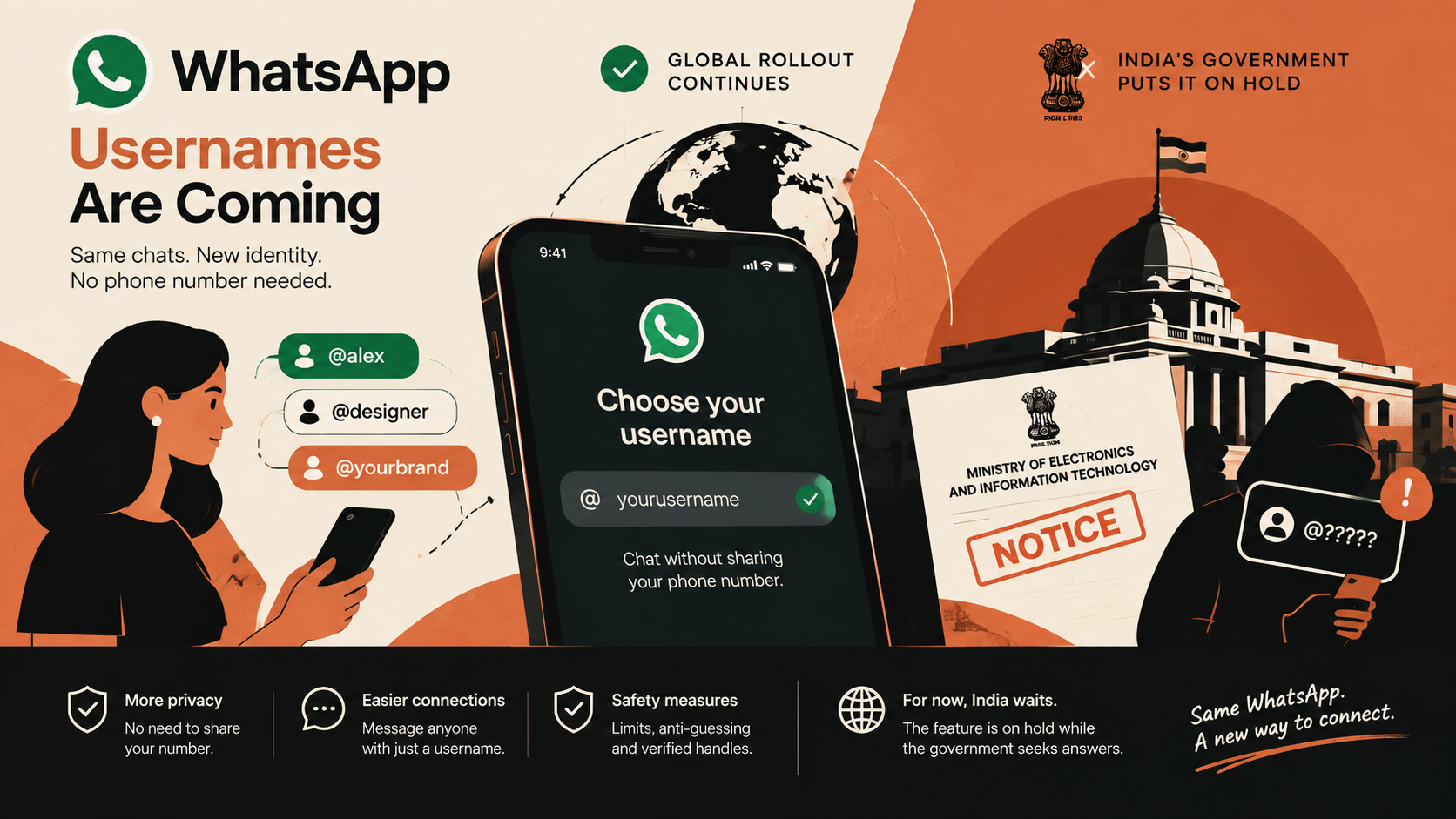
WhatsApp Is Finally Ditching Phone Numbers for Usernames, So Why Can't You Use It in India Yet?
For as long as WhatsApp has existed, your phone number has been your identity on the app. Want to chat with someone new? You need their number. Want a stranger to reach you? They now have your number too, whether you're comfortable with that or not. That's about to change, at least in most of the world. WhatsApp announced it's rolling out usernames, letting people message each other without ever sharing a phone number, similar to how Instagram or X handles work. In India, though, the rollout has hit an unexpected wall: the government.
What WhatsApp Actually Announced
In late June 2026, WhatsApp said it was opening up the ability to reserve a personal username, a unique handle you can share instead of your phone number. Once the full system goes live, people will be able to start conversations using just that username. The company framed it as a long-requested privacy upgrade: you can hand your username to a classmate, a new business contact, or a parent in your kid's group chat, without handing over your actual phone number in the process.
It's an optional feature, meaning your phone number still works exactly as it always has if you never set up a username. WhatsApp has also said it's building in safeguards, including limits on how many new people a single account can message, protections against people repeatedly guessing usernames to find someone, and reserved handles for verified accounts to cut down on impersonation.
Then India Stepped In
Just days after the announcement, India's Ministry of Electronics and Information Technology sent WhatsApp a formal notice. The government's concern was straightforward: if people can be contacted through a username instead of a traceable phone number, it becomes significantly easier for scammers to reach victims while staying harder to trace, especially for things like phishing, impersonation scams, and the so-called "digital arrest" frauds that have been a growing problem in India.
The ministry gave WhatsApp a matter of days to explain how the feature would prevent this kind of abuse, and directed the company not to launch usernames in India until that explanation, and further consultation, was complete. WhatsApp agreed to pause the India rollout while those discussions continue. Notably, the government also reached out to Telegram and Signal, asking how their own username-based systems handle similar fraud and impersonation risks, since both platforms have offered usernames for years.
Why This Isn't Coming Out of Nowhere
This didn't happen in isolation. It follows India's recent, much stronger crackdown on Telegram, which faced restrictions over concerns about fraud, leaked exam papers, and misuse of anonymous accounts. Government officials have made it fairly clear they see WhatsApp's username plan through a similar lens, another way people can contact each other while staying harder to trace when something goes wrong.
There's also a very real, very online debate happening around this. Some tech commentators, including well-known Indian entrepreneurs, have pointed out that removing the phone number from a first contact strips away a layer of trust a lot of people quietly rely on. If a message comes from a random ten-digit number, most people are at least a little cautious. If it comes from a friendly-looking username that closely mimics someone they know, that instinct doesn't kick in the same way, which is exactly the kind of gap scammers look for.
What This Means If You Run a Business on WhatsApp
This is the part that matters most if you use WhatsApp to talk to customers, and in India, an enormous number of small businesses do. Once usernames do roll out, they change how customers will be able to find and remember you. Instead of a phone number that's easy to mistype or forget, a business could eventually be reachable through something like a clean, brandable handle, similar to an Instagram username, making it easier for word-of-mouth and referrals to turn into an actual conversation.
But there's a flip side businesses need to take seriously too. If usernames make impersonation easier, as regulators are worried they will, that risk doesn't just apply to individuals. A business's identity, its name, its reputation, is exactly the kind of thing a scammer could try to imitate using a similar username to trick that business's own customers. Getting ahead of that, by securing your brand's handle early once the feature does open up and clearly educating your customers on how to verify they're really talking to you, is going to matter.
What Happens Next
As of now, the username feature remains on hold in India while WhatsApp and the government continue talking. The rest of the world isn't necessarily waiting on that outcome, WhatsApp has said the global rollout will continue gradually. So businesses and individuals in India may end up watching this feature launch everywhere else first, while regulators work out what safeguards they want in place before it's allowed to reach WhatsApp's largest market.
The Bottom Line
WhatsApp's move away from phone numbers is a genuinely significant shift in how billions of people will identify themselves online, and the pushback it's getting in India is a preview of a tension that's going to keep coming up as platforms try to offer more privacy: the same feature that protects someone's personal number can also make it easier for a bad actor to hide behind a friendly-looking name. Whether WhatsApp and Indian regulators land on a version of this feature that satisfies both sides is still playing out, but businesses that rely on WhatsApp to reach customers should be watching this one closely.
FAQ
Can I use WhatsApp usernames in India right now?
Not yet. The rollout is on hold in India while WhatsApp responds to concerns raised by the Ministry of Electronics and Information Technology and consultations continue.
Will I still be reachable by phone number once usernames launch?
Yes. WhatsApp has said usernames are optional, and your phone number will continue to work exactly as it does today even after the feature is available.
Why is the Indian government concerned about this feature?
Officials have said that letting people message others through a username instead of a traceable phone number could make it easier for scammers to carry out fraud, phishing, and impersonation attacks, while making it harder for investigators to trace those involved.
Is this related to India's action against Telegram?
It follows a similar pattern. India recently restricted Telegram over concerns about fraud and misuse tied to anonymous accounts, and regulators have said they see similar risks in WhatsApp's username plan.
What should businesses using WhatsApp do in the meantime?
Keep an eye on the rollout timeline for India, and once usernames do become available, consider securing a username that clearly matches your business name early, while also making it easy for customers to verify they're speaking with your real account.